

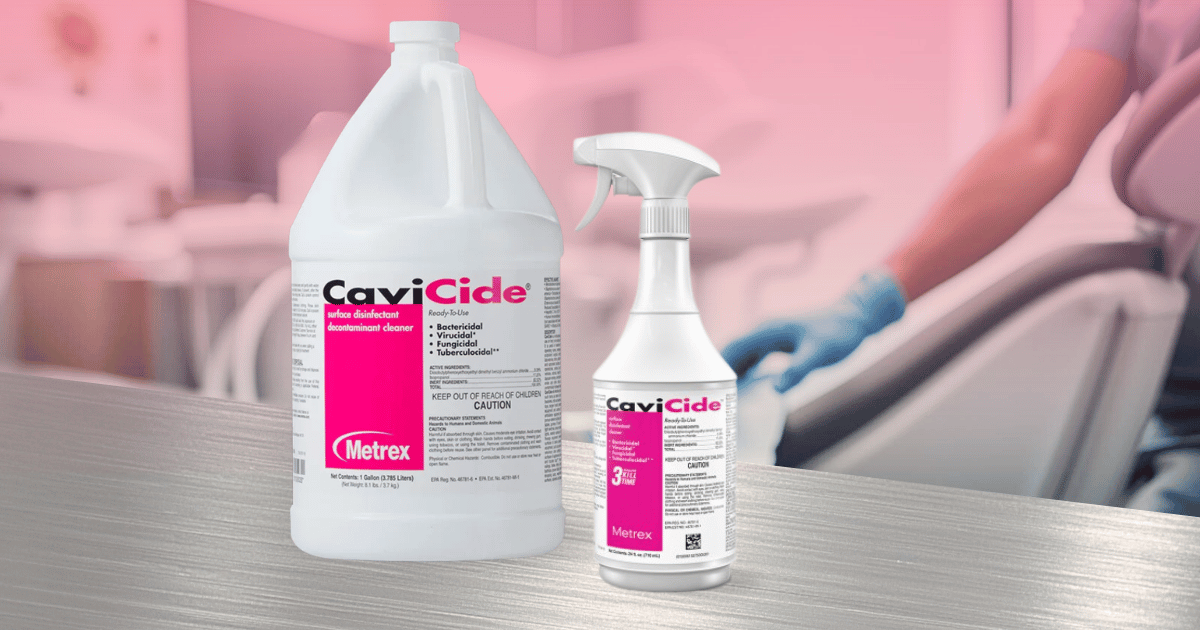
When it comes to infection control, CaviCide is a household name in clinics, dental offices, and hospitals. But as a liquid spray and soak, it works a little differently than the pre-saturated wipes you might be used to.
Whether you’re looking to disinfect high-touch surfaces or pre-clean medical instruments, knowing exactly how to use CaviCide is the key to keeping your environment germ-free. We’ve rounded up the most frequently asked questions to help you use this powerful disinfectant safely and effectively.
What is CaviCide and how is it different from CaviWipes?
While both products share the same trusted Metrex formula, the difference lies in the application.
- CaviWipes are pre-saturated towelettes, perfect for quick, convenient wipedowns.
- CaviCide is a ready-to-use liquid. It can be used as a spray, a soak (immersion) for instruments, or as a solution for ultrasonic cleaners. It’s often the more versatile choice for deep cleaning or for larger surface areas where a wipe might dry out too quickly.
How do I use CaviCide correctly?
To get the most out of CaviCide, follow this simple two-step process:
- Clean: Spray CaviCide onto the surface and wipe it down with a clean towel to remove visible “bioburden” (dirt, dust, or fluids).
- Disinfect: Spray the surface again, ensuring it is completely wet. This is the most important step! The surface must stay visibly wet for the full “contact time” listed on the label to kill the germs effectively.
What is the “kill time” or contact time for CaviCide?
CaviCide is an intermediate-level disinfectant, meaning it is incredibly fast and effective.
- 2 Minutes: Kills most common viruses and bacteria, including MRSA, HIV-1, HBV, and HCV.
- 3 Minutes: Kills TB (Mycobacterium tuberculosis), which is one of the hardest pathogens to eliminate.
- COVID-19: CaviCide is on the EPA List N, meaning it is approved for use against SARS-CoV-2 (the virus that causes COVID-19).
Can I use CaviCide to refill my old CaviWipes canisters?
No. This is a common mistake! You should never pour CaviCide liquid into an empty wipe container or onto paper towels. Standard paper towels and certain fabrics can cause “Quat binding,” a chemical reaction where the active ingredients in the disinfectant get trapped in the fibers of the towel instead of being released onto the surface. To ensure safety, always use CaviWipes if you prefer a wipe format.
Is CaviCide safe for all surfaces?
CaviCide is designed for hard, non-porous surfaces. It is highly compatible with:
- Stainless steel
- Plastics (like polycarbonate and polypropylene)
- Glass and Plexiglas
- Vinyl and non-porous upholstery
- Medical equipment like dental chairs, infant incubators, and lab counters.
Avoid using it on porous materials like wood or unsealed stone, as the alcohol content can cause damage over time.
Do I need to wear gloves when using CaviCide?
Yes. Because CaviCide contains a specialized blend of alcohol and quaternary ammonium, it can be drying or irritating to the skin. We recommend wearing disposable gloves and, if you are spraying in a confined area, ensuring there is adequate ventilation.
CaviCide vs. CaviWipes: Which Should I Choose?
The choice depends on your specific needs. If you need a fast, “grab-and-go” solution for exam tables or keyboards, CaviWipes disinfectant wipes are your best bet.
However, if you are cleaning complex equipment with nooks and crannies, or if you need to decontaminate instruments before sterilization, CaviCide liquid provides the thorough coverage you need.
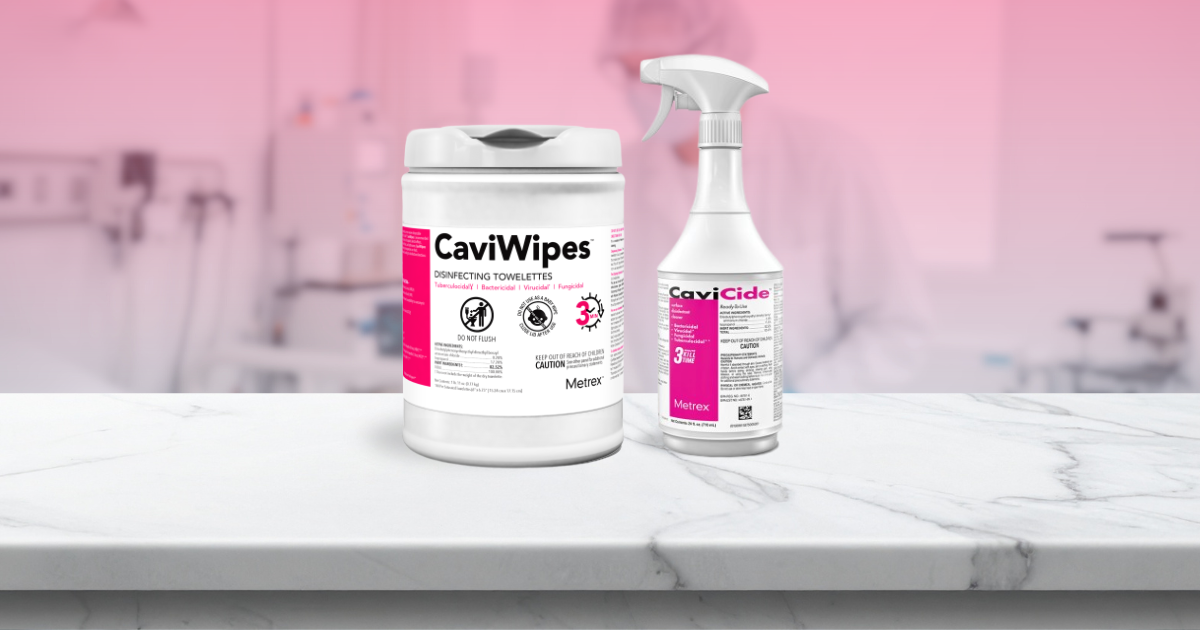
Wipes vs. Spray: Which should You Choose?
Read our comparison guide to see which is right for your needs.
Ready to stock up on CaviCide?
At HonestMed, we carry CaviCide in various sizes—from 24oz spray bottles to 1-gallon refills—to keep your facility running smoothly. Shop our full collection of Metrex infection control products here.
Learn more by speaking to an HonestMed Care Specialist at (833) 933-2323. We’re here to provide you with product knowledge, support, and expertise to ensure you get the right products for your unique needs and budget.
Disclaimer: Always read the product label and manufacturer instructions before use. Ensure the product is appropriate for the specific surface you intend to clean.


