


This guide highlights the importance of specialized nutrition for premature and low-birth-weight infants transitioning from the NICU to home care. It explores how nutrient-dense formulas like Similac NeoSure and Enfamil EnfaCare support critical “catch-up” growth, brain development, and bone health. While the ‘Beyond the NICU’ textbook provides clinical protocols, this post offers practical advice for parents on monitoring feeding schedules and working with pediatricians to safely transition to standard formulas.
Childbirth is a wonderful time for most families but having a baby prematurely is a stressful situation. A baby is typically considered preterm, or preemie, when it is born at 36 weeks of pregnancy or earlier. A pregnancy is considered full-term at 40 weeks. Weight is also a consideration, and preterm infants usually weigh less than 5.5 pounds. In fact, the American Academy of Pediatrics (AAP) refers to these babies as VLBW (very low birth weight) since some full-term babies may have conditions that put them within this category.
According to the March of Dimes, approximately 10 percent of babies born in the United States are premature. Prematurity and low birth weight are the primary, though not only, reasons for NICU admission. Infections, heart defects, and respiratory issues also require intensive care. Regardless of the cause, these newborns receive constant monitoring and specialized care to thrive. A key component of this care is making sure these fragile newborns receive sufficient nutrition.
Why Do NICU Babies Need Specialized Infant Formula?
While breast milk is healthiest, NICU babies often require supplemental nutrients to support their growth. Preterm and underweight infants must gain weight quickly to mimic development inside the womb. Babies gain the most weight during weeks 35–40, a crucial period for brain and lung development. When babies are born at week 36 or earlier, they miss a vital growth period. Premature infants need supplemental nutrients to achieve the rapid growth they would have experienced in the womb.
Pediatricians use fortified milk and special formula to ensure proper organ and brain development in the NICU. Once a baby is deemed ready to go home, the need for increased levels of nutrients remains. That is why choosing a formula designed for preemies is critical, and you should always follow your doctor’s advice. This blog explores nutrients in preterm formulas and their role in your baby’s development.
Infant Formula Nutrient Guidelines for Preterm and High-Risk Babies
Recommended post-NICU formulas provide robust nutrients for high-risk infants. These can supplement or replace breast milk. Honest Medical offers the formulas most often recommended by pediatricians, including Similac NeoSure and Enfamil NeuroPro EnfaCare as well as formulas ideal for healthy full-term babies.
This chart outlines essential nutrients in preterm formulas and explains why they are important:
| Nutrient Requirements | Health Advantages for Your Preterm Baby |
| Calories (110-130 per every 2 pounds) | Preemies need more calories than full-term babies to fuel rapid growth and make up for what they would have gained during final weeks in the womb. |
| Protein and Amino Acids | These are essential for building new tissues, developing organs and supporting brain growth. |
| Fats and Long-Chain Polyunsaturated Fatty Acids (LCPUFAs), especially DHA (docosahexaenoic acid) and ARA (arachidonic acid) | Because preemies miss critical fat gain in the final weeks of the third trimester – these added fats mimic what is in breast milk but boost the levels. They are foundational for nerve and brain structure development and vision. |
| Calcium and Phosphorous | Preterm babies don’t receive crucial placental transfers of these minerals, and they are needed to prevent metabolic bone disease. |
| Iron | This is necessary for healthy blood as well as neural development because stores of this in a preterm underweight baby are low. |
| Vitamins: A, C, D, and more, plus Trace Minerals: zinc, selenium, etc. | These essential vitamins and minerals are needed for overall growth, and immunity and enzyme functions. |
💡 Recommendations for Post NICU Baby Care
The American Academy of Pediatrics offers strategies for parents after a VLBW baby is discharged from the NICU. They are designed to ensure that your baby receives optimal nutrition as they transition from preterm feedings to standard baby formula:
- Your baby should be reevaluated by your pediatrician within 24 to 48 hours after discharge.
- If you need lactation support, the La Leche League International and the Women, Infants and Children Program (WIC) offer community resources and support. Also, your hospital may have lactation support so be sure to ask.
- It’s important to keep a log of your baby’s feedings – including breast milk and formula feeding as well as tracking when the baby eliminates.
- Have a well-defined feeding plan in place – both breast feeding and formula support – before you take your baby home from the NICU. Consult with your pediatrician to make sure your feeding plan is tailored to your baby’s specific needs.
- Infant formula amounts should be customized so babies with poor weight gain receive more calories or formula post-NICU.
- Your baby should be breastfed with careful attention to feeding cues and ideally nursed eight times within each 24-hour period.
- You may transition your baby from the higher calorie preterm formula to a formula designed for full-term infants if the baby is experiencing good weight gain and growth that is above the 10th percentile. This is per the World Health Organization (WHO) Growth Charts for infants 0 to 24 months.
- Avoid formulas based on soy protein because of an increased risk of osteopenia, which causes lower density bones that are more prone to fracture.
✅ Infant Formulas That Support Development Post NICU
There are several formulas on the market that contain the important nutrients preterm and high-risk babies need both in the NICU and at home. Two brands that are often recommended by pediatricians are offered by Honest Medical and available in both powder and liquid form. They include the enriched nutrients outlined in the previous chart and are milk-based formulas and not soy-based. The following is information about each one:
Why is Enfamil NeuroPro EnfaCare Infant Formula recommended for preemie babies?
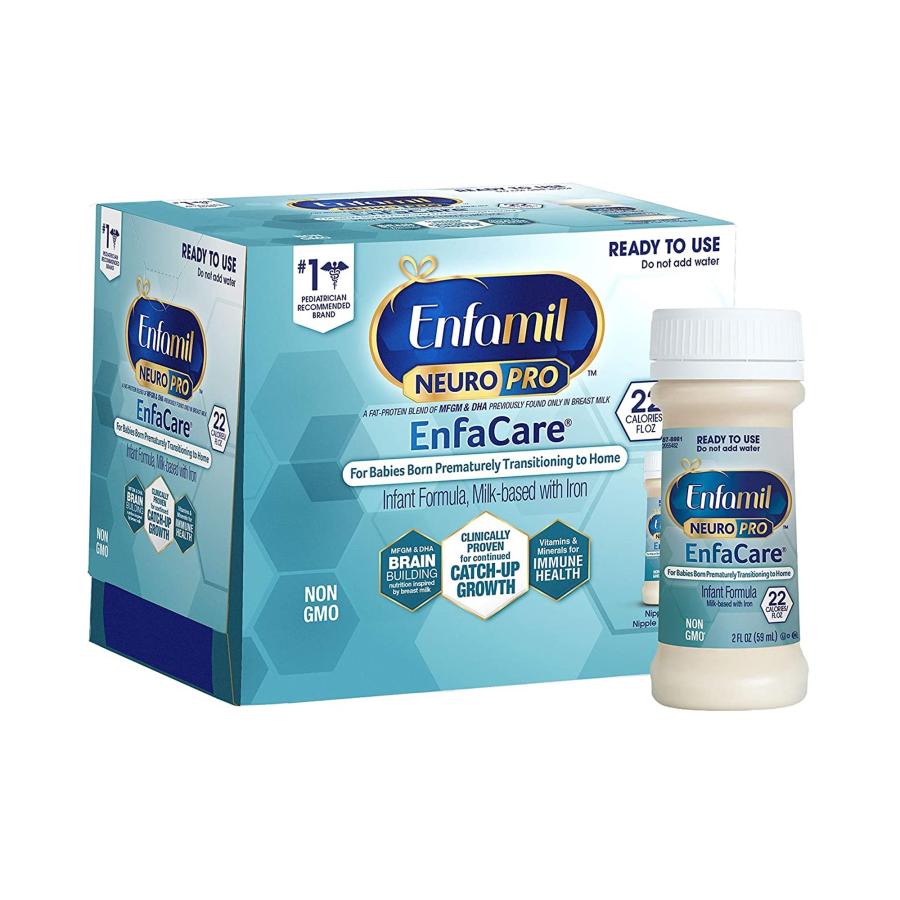
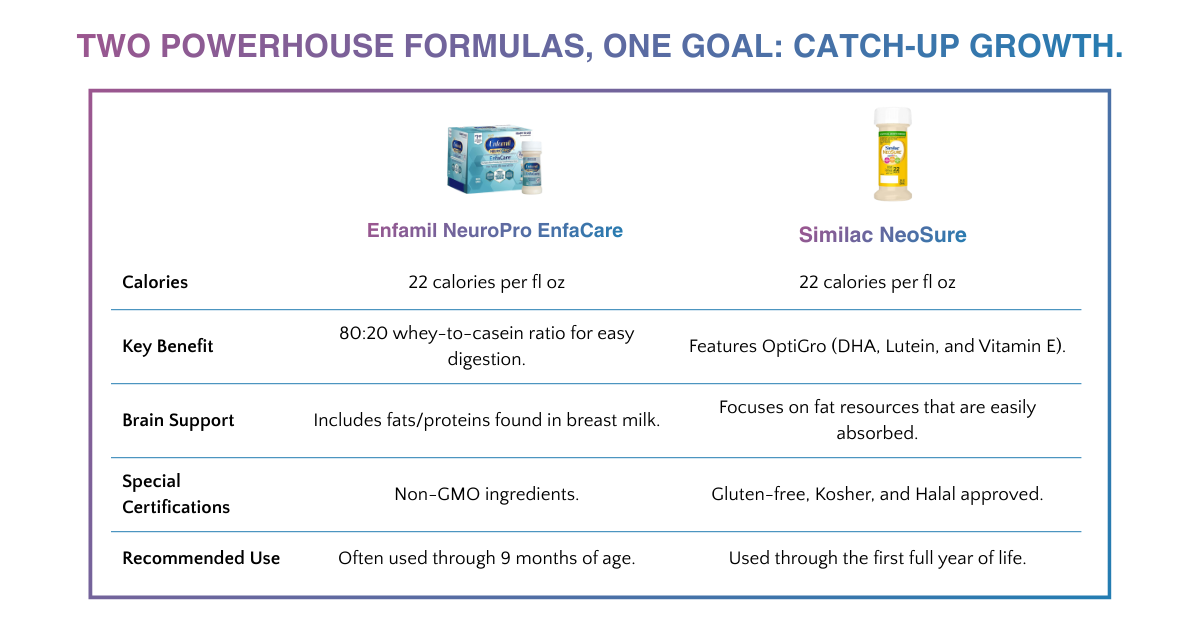
NeuroPro EnfaCare provides essential nutrients in an enriched formula designed to mimic early breast milk. This includes an 80:20 whey to casein ratio which creates a more easily digested formula for fragile infants. In addition, according to Enfamil data their formula has the following benefits:
- Preterm babies receiving this formula had catch-up, weight gain similar to breast-fed full-term babies.
- It has 22 calories per ounce, which is in keeping with recommended calorie intake for VLBW babies.
- NeuroPro EnfaCare includes the fats and proteins previously found only in breast milk that are so vital to weight gain as well as brain structure and nerve development.
- It has the nutrients needed to support brain and eye development and immune systems in pre-term VLBW infants.
- It is non-GMO (genetically modified organism).
- This infant formula is recommended to be used through nine months of age.
Why is Similac NeoSure Infant Formula recommended for preemie babies?

NeoSure provides the nutrient-enriched formula VLBW babies need and is ideal for post-NICU use at home. Here are some other attributes of this formula:
- Provides 22 calories per ounce to enhance catch-up weight gain during the first year.
- This formula should only be used under medical supervision – which is true of all feeding regimens for post NICU infants.
- It uses easily digestible well-absorbed fat resources per the recommendations of experts.
- Has OptiGro, Similac’s exclusive blend of DHA, lutein and Vitamin E.
- It is gluten-free and Kosher and Halal approved.
📒 How Do you Transition a Preemie Baby to Standard Infant Formula?
Approaching the transition to standard formula requires a well-formed plan based on your baby’s development. Formulas such as Enfamil NeuroPro, can provide the nutrition and benefits full-term babies need as they grow and transition to solid foods. The following are some suggestions for how best to introduce a standard formula as your preterm baby grows:
- Most important is to consult your pediatrician before beginning a transitional feeding regimen to make sure the timing is correct.
- If your baby has been getting both breast milk and preterm infant formula, you should continue that combination as part of your baby’s program.
- Most doctors recommend mixing the old formula with the new for several days or weeks to ensure your baby’s tolerance – you can monitor for baby fussiness or spitting up or bowel changes.
- Ask your doctor whether iron or vitamin supplements should be added to the baby’s feeding when they move to a standard formula.
- Be patient – it often takes several weeks to transition a baby to standard feeding even if their development is now on track for their age.
Honest Medical Has the Infant Formula You Need
Whether you are the parents of a preterm baby being discharged from the NICU, or you care for preterm infants in a hospital or other institutional setting, you can rely on Honest Medical for the formula brands most pediatricians recommend to help preterm babies catch up, and keep full-term babies healthy and growing.
Learn more by speaking to an HonestMed Care Specialist at (833) 933-2323. We’re here to provide you with product knowledge, support, and expertise to ensure you get the right products for your unique needs and budget.


